

















The best yoga mat for you depends on how you practice, where you use it and what feels comfortable under your hands and knees. Grip matters, but so do cushioning, stability, size and how easy the mat is to carry.
Use this guide to compare yoga mat materials and thicknesses, understand the trade-offs and choose a mat that fits your routine.
Start with your practice
For flowing styles such as vinyasa, look for a stable surface that grips well as you move between poses. For slower floor-based sessions, you may prefer more cushioning. If you combine yoga and mat Pilates, think about how much time you spend standing compared with kneeling or lying down.
Your instructor may be able to help you compare options in class. A mat that feels comfortable to someone else may not be the right one for you.
How thick should a yoga mat be?
Many everyday yoga mats sit around the 3 to 5 mm range, offering a balance between cushioning and contact with the floor. Thicker options, around 6 mm or more, may feel more comfortable for some floor exercises, but a very soft mat can make standing balances less stable.
Thickness is only part of the picture. A dense mat and a soft foam mat of the same thickness can feel quite different. If possible, test both a standing pose and a kneeling position before deciding.
Common yoga mat materials
Natural rubber
Natural rubber mats often provide a grounded, substantial feel. Weight, grip and surface finish vary, so compare the specific product. If you have a latex allergy, check with the manufacturer before choosing a natural-rubber mat.
Polyurethane, or PU, surfaces
Some mats use a PU top layer over a rubber base. These surfaces are often designed with grip in mind, including for sweatier practice, but performance and cleaning requirements differ. Follow the instructions for the particular mat rather than treating all PU surfaces alike.
TPE
TPE mats are often relatively light and cushioned, which can be useful if you carry your mat regularly. Check density, grip and durability as well as weight. The material name alone does not prove that a mat is environmentally friendly or recyclable in your area.
Cork
Cork-top mats offer a different texture and are usually combined with another material underneath. Some are designed to grip better with a little moisture, but follow the manufacturer's guidance. Check how the surface feels for the way you practice.
Check grip, length and width
A mat needs to stay steady on the floor as well as feel secure under your hands and feet. Grip can change with sweat, dust, lotions and wear. Keep the surface clean according to its care instructions and avoid practicing on a mat that is sliding around.
Choose enough length and width for your comfortable range of movement. If you travel to class, also consider the rolled size and weight. A larger mat may give you more room but take more effort to carry.
Does color matter?
Color is a personal choice. A black yoga mat can give your setup a simple, understated look, while a lighter shade may suit your space or style. Marks and wear show differently depending on the material and finish, so do not assume one color will always look cleaner.
Carrying straps and accessories
A carry strap can make the trip to the studio easier and help keep the mat rolled. Check that it fits securely without damaging the surface.
Only use a strap for stretching if the manufacturer says it is designed for that purpose. A carrying strap and a yoga stretching strap are not automatically interchangeable.
How to care for your mat
- Read the product instructions. Different surfaces need different cleaning methods.
- Avoid unapproved treatments. Do not use salt scrubs, oils or abrasive cleaners unless the manufacturer specifically recommends them for that mat.
- Use an appropriate cleaner. A damp cloth may be suitable for some mats, while others have specific care products or limits on soap and water.
- Let it dry before rolling. Follow the recommended drying method and avoid heat or direct sunlight if the care instructions warn against them.
- Check the surface regularly. Worn, peeling or slippery areas may be a sign that it is time to replace the mat.
Some mats have a recommended break-in process; others do not. Do not assume that a method used for one brand or material is safe for another.
The Vlinks Premium Natural Yoga Mat
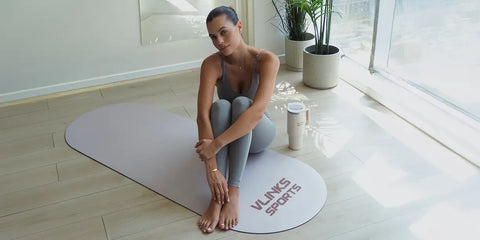
The Vlinks Premium Natural Yoga Mat is listed as made from natural rubber with a matte finish and a carrying strap. Its dimensions are 183 × 66 cm, approximately 72 × 26 inches.
Check the product page for current options and ask the team about thickness, weight or care instructions if those details are important to your choice. A mat's suitability for your practice depends on how it feels and performs for you.
Frequently asked questions
What yoga mat should a beginner choose?
Start with a stable surface, comfortable cushioning and a size you can use easily. You do not need the thickest or most expensive mat. Consider the classes you plan to attend and how you will transport it.
Is a Pilates mat different from a yoga mat?
Mat Pilates often involves more floor work, so some people prefer extra cushioning. Yoga includes more standing and balancing positions, where a firmer base may be useful. A single mat can work for both if it meets your needs.
What if my hands slip when I sweat?
Check that the mat is clean and suitable for sweaty practice. A compatible yoga towel may help with some mats, but follow the manufacturer's advice. Do not add oils or cleaning products to try to improve grip.
Need help choosing?
Explore the Vlinks mat online or contact +972 53-360-8550 or support@vlinksshop.com with your questions about materials, dimensions and care.


