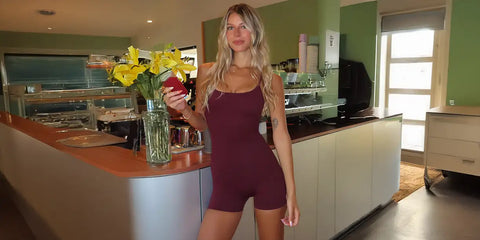
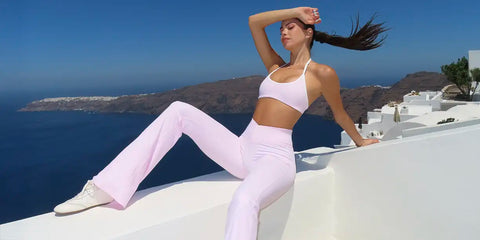
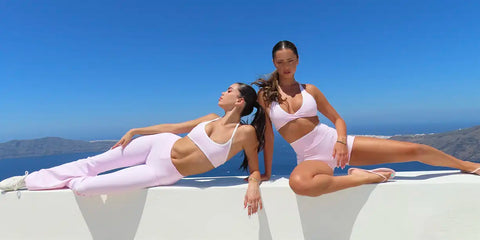
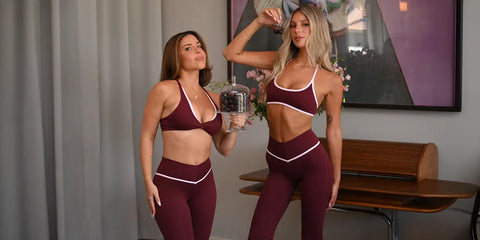
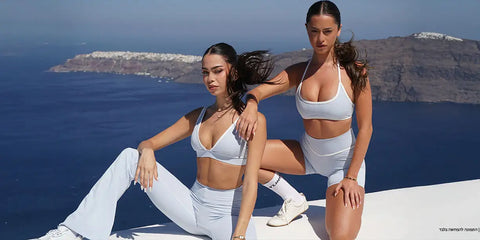
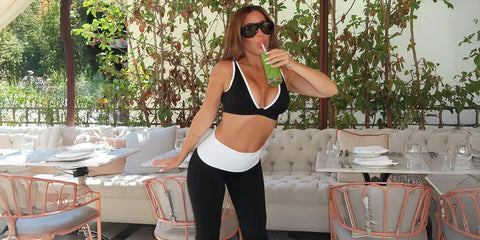
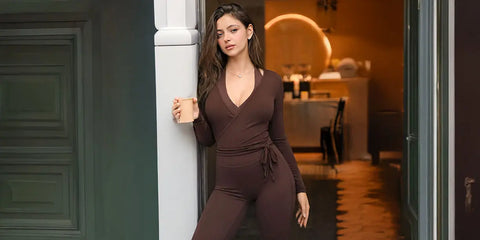
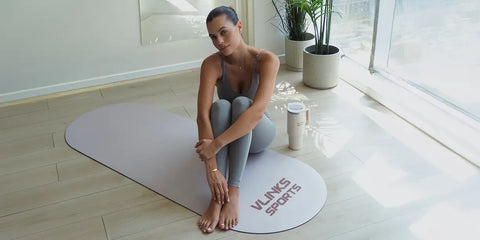
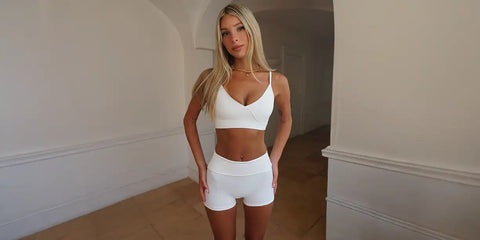

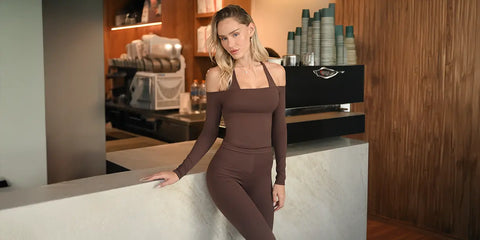
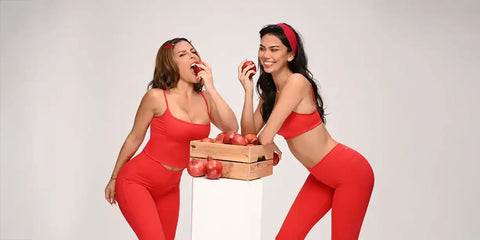
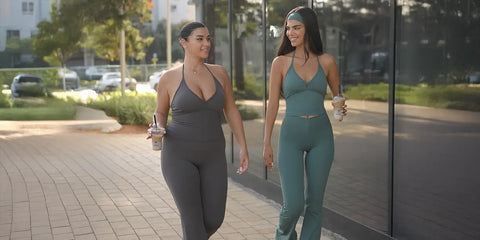

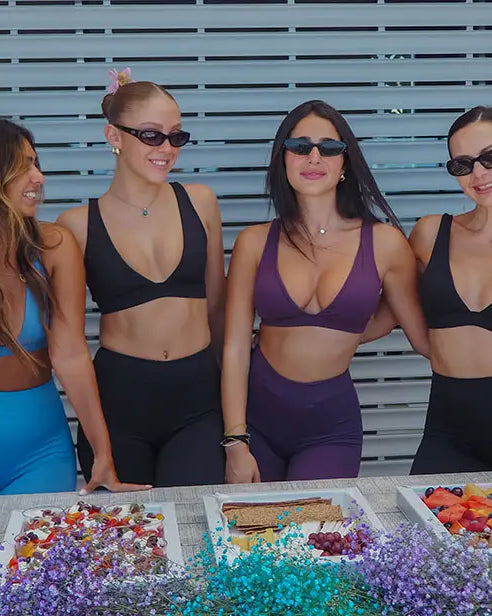

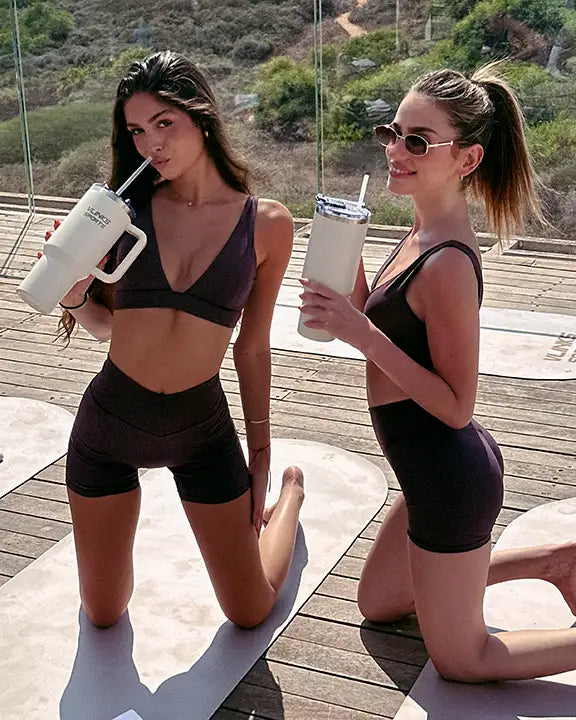

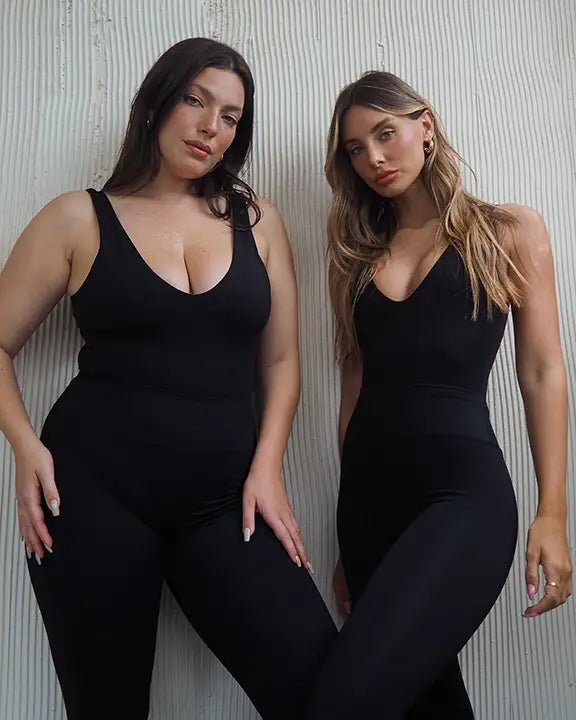


For Pilates, choose comfortable, stretchy clothes that stay in place as you bend, reach and lie down. Leggings or fitted shorts with a sports bra and top are an easy option; a well-fitting workout onesie can work too.
For reformer Pilates, avoid loose fabric, dangling ties and hard details that could catch on equipment or press into you. Many studios require grip socks, so check the class instructions before you go.
Explore the Pilates Girl Collection and yoga and Pilates activewear, or use this guide to put together an outfit from pieces you already own.
Four things to look for in Pilates clothing
- Freedom to move: Test a bend, a reach and a seated position. The fabric should move with you without pulling.
- A comfortable fabric: Choose a feel and weight that suit the class and how warm you tend to get. Check individual product details for moisture-wicking features.
- A secure fit: Close-fitting clothing can help your instructor see your alignment and is less likely to move around on equipment. It should not feel restrictive.
- Practical care: Look at the care label and construction so you know how to look after pieces you plan to wear often.
Leggings, shorts or a Pilates onesie?
Leggings
Leggings are a straightforward choice for mat and reformer classes. A comfortable high-rise waistband can offer coverage during rolling and leg movements. Check that it does not dig in when you sit and that the fabric stays opaque when stretched.
Browse women's leggings for different cuts. For reformer work, a fitted ankle is often simpler than a loose flare; ask your studio if you are unsure about a particular style.
Fitted shorts
Biker shorts can be comfortable in warm weather or if you prefer less coverage. Choose a length that stays put when you lift or separate your legs. Loose running shorts may open up or shift more than you want during floor work.
Try a few movements before class and check your coverage from different angles. Explore biker shorts for fitted options.
Workout onesies
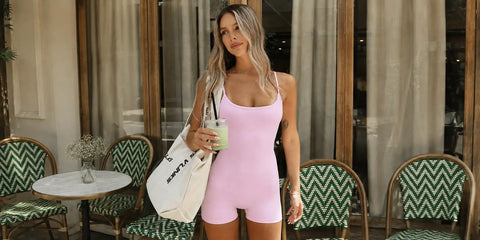
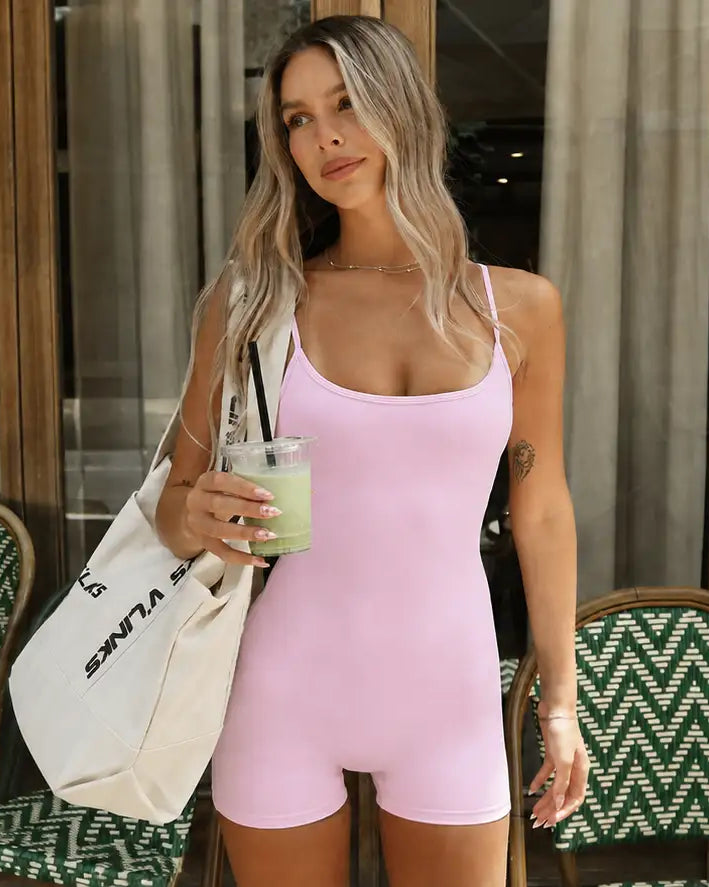
A one-piece outfit keeps your top and bottoms together, which can be convenient when you are bending or lifting your hips. Check torso length, straps and neckline as well as your usual size. Reach overhead and sit down to make sure it does not pull.
Some onesies may need a separate sports bra for the support you prefer. Read the product details when browsing activewear onesies.
Sports bras and tops
Choose a sports bra that feels supportive for you and the class. Pilates is often low impact, but support needs vary. A bra should not dig into your shoulders or make breathing uncomfortable.
Add a fitted or gently shaped top that stays clear of your face when you bend forward. Avoid bulky knots or hard fastenings where your back will rest on the mat or carriage. If you prefer to wear a sports bra alone, check your studio's dress guidelines.
Do you need shoes or grip socks for Pilates?
Most mat and reformer classes are practiced without shoes. Many reformer studios require grip socks with nonslip soles. Other studios have different policies, so follow the instructions for your class.
For mat Pilates, barefoot practice or grip socks may be suitable depending on the setting. Ordinary socks can be slippery. Browse the socks collection and check each product's sole and description if your studio requires grip socks; not every sports sock is a Pilates sock.
Mat Pilates vs. reformer Pilates: clothing differences
For a reformer class
Choose secure, close-fitting clothing without dangling straps, loose ties or details that could catch in moving parts. Avoid exposed zippers and bulky fastenings. Tie back long hair and remove jewelry that could interfere with the equipment. Bring the socks your studio requests.
For a mat class
You may have a little more freedom in the fit of your clothes, but they still need to stay comfortable as you roll, reach and change position. Smooth seams and fastenings matter when you are lying on your back or stomach. Ask whether you should bring your own mat.
Common outfit mistakes to avoid
- Hard details: Zippers, buttons and bulky clips can press into you or catch on equipment.
- Restrictive fabric: Make sure you can move through a comfortable range without pulling at the garment.
- Loose hair and accessories: Secure long hair and keep dangling items away from moving equipment.
- The wrong size: Clothes that are too loose may shift; clothes that are too tight may restrict you. Use the product size chart and test the fit in motion.
- Assuming the studio supplies everything: Check its equipment, mat, towel and sock requirements before your first visit.
Your first Pilates class checklist
- Leggings, fitted shorts or a comfortable onesie.
- A suitable sports bra and a top that stays in place.
- Grip socks if required by the studio.
- A water bottle.
- A small towel if needed.
- A hair tie for longer hair.
- Your own mat if the studio asks you to bring one.
Frequently asked questions
Can I wear shorts to Pilates?
Yes, if they stay in place and give you the coverage you want. Fitted biker shorts are often easier to manage than loose shorts during leg lifts and floor exercises.
Can I wear yoga clothes to Pilates?
Often, yes. Stretchy leggings and a secure top can work for both. For reformer classes, check for loose fabric and any details that could catch on the equipment.
Should Pilates clothes be very tight?
They should fit securely without restricting your movement or breathing. Close-fitting does not mean choosing a size that is too small.
What should I bring to my first reformer class?
Start with the checklist above and read your studio's instructions. Ask about grip socks and arrival time so you can settle in before the class begins.
Find your Pilates outfit at Vlinks
Explore studio styles in the Pilates Girl Collection and choose the fit and fabric you enjoy wearing. For international orders, check delivery options, shipping times and return conditions for your destination at checkout. Contact us at +972 53-360-8550 for product and sizing questions.


