
















Strength training means asking your muscles to work against resistance. That resistance can come from your own body weight, dumbbells, resistance bands or gym machines. You can start at home with a clear space and a few movements suited to your ability.
If lifting weights feels unfamiliar, you do not need to master everything at once. This guide covers the benefits of strength training for women, how to build a manageable routine and what to wear so you can focus on moving.
What is strength training?
Also called resistance training, strength training includes controlled movements against a load. You might repeat a movement several times, rest, then perform another set. Some exercises involve holding a position, such as a plank.
As you become more comfortable and capable, you can gradually change the resistance, repetitions or exercise variation. A women's strength routine follows the same basic principles as any other: the right starting point depends on your experience, goals, health and available time.
Benefits of strength training for women
- Everyday strength: Building or maintaining muscle can help with tasks such as carrying shopping, climbing stairs and getting up from the floor.
- Bone health: Appropriate resistance exercise supports bone strength. If you have osteoporosis or another bone condition, get advice on suitable movements.
- Muscle maintenance: Strength work helps you maintain or increase muscle as part of an active lifestyle. Changes in body composition vary; lifting is not a guarantee of a particular appearance or weight change.
- Balance and movement: Training the muscles involved in everyday tasks can support stability and physical function.
- Confidence: Learning a movement or noticing that a familiar weight feels easier can be satisfying progress, regardless of what the scale says.
How to start strength training at home
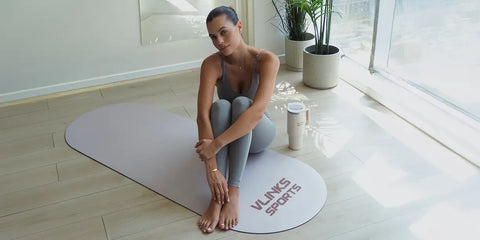
Make room to move
Choose a space with enough room to reach, step and lie down safely. Move obstacles out of the way and use a stable, nonslip surface. Keep equipment where you can pick it up and put it down without tripping.
Learn the movement first
Practice an exercise with a manageable load before increasing the challenge. A qualified trainer can help you choose suitable variations and check your technique. Clear demonstrations from reputable sources can also help, but they cannot assess your individual movement the way a coach can.
Support your training with regular meals
Eat enough to support your activity and include a variety of foods through the day. You do not need a special meal immediately before and after every short session. Plan food and fluids around what feels comfortable for you; our pre-workout food guide has practical ideas.
Strength training without equipment
Bodyweight movements can be a useful starting point. Examples include a squat to a sturdy chair, a supported lunge, a glute bridge, a wall or incline push-up and a modified plank. Choose variations you can control comfortably.
You can make progress by improving your technique, adding a few repetitions or trying a more challenging variation when ready. Bodyweight exercise is still resistance training; equipment is an option, not an entry requirement.
Adding dumbbells or resistance bands
A pair of dumbbells or a few bands can add variety without taking up much space. Choose resistance that feels challenging while still allowing you to complete the movement with control. If you have to swing, hold your breath or lose position, reduce the load or choose an easier variation.
Inspect bands before using them and follow the manufacturer's instructions for anchoring and handling. Do not attach a band to furniture or a fixture that could move or fail.
A simple weekly structure for beginners
General adult activity guidance includes muscle-strengthening work on at least two days a week, covering the major muscle groups. Your starting routine can be smaller if needed and build gradually.
Here is one way to organize a week, rather than a personalized exercise prescription:
- First session: Practice a small selection of lower-body, pushing, pulling and core movements suited to you.
- Recovery day: Rest or enjoy gentle movement, such as a comfortable walk.
- Second session: Return to similar movement patterns so you can practice and build familiarity.
- Optional additional session: Add one only if your schedule and recovery support it. You do not need to increase the weight every time.
Leave at least one full day between demanding sessions for the same muscle groups. A manageable routine you can repeat is more useful than one that leaves you exhausted after the first week.
Basic safety habits
- Warm up with light movement and easier versions of your first exercises.
- Increase the challenge gradually, keeping control of the movement.
- Breathe steadily; avoid holding your breath through the effort.
- Stop an exercise that causes sharp or unusual pain.
- If you have a medical condition, an injury, or are pregnant or returning after childbirth, ask a qualified professional how to adapt a new routine.
What to wear for strength training
Choose clothing that lets you squat, reach and bend without distracting adjustments.
- Leggings that stay in place: Check waistband comfort and coverage in a deep bend. Explore women's workout leggings.
- Support suited to you: A well-fitting sports bra should feel comfortable for the movements in your session.
- Tops with room to move: Make sure you can lift your arms and hinge forward comfortably.
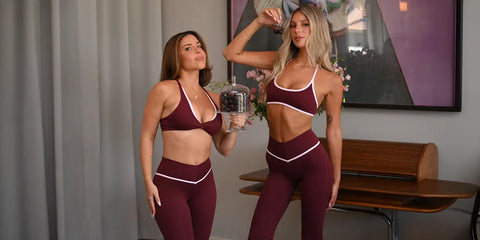
- An easy outfit: A matching activewear set can simplify getting ready if that is your preference.
Use the size chart and fit notes for the item you are considering. The right clothing supports comfort; it does not replace good technique or an appropriate training plan.
Frequently asked questions
Will lifting weights make me very muscular?
Muscle growth happens gradually and varies with training, nutrition and individual factors. You can choose goals centered on strength, daily function or building muscle, and adjust your routine as you learn what you enjoy.
Can I build strength at home without weights?
Yes. Suitable bodyweight movements can challenge your muscles, especially when you are starting out. Over time, you may choose harder variations or add resistance.
What weight should I start with?
There is no single starting weight for everyone or every exercise. Choose a load you can control through the planned repetitions, and ask a trainer for help if you are unsure.
Can I combine strength training with Pilates, yoga or running?
Yes. Plan the week so the overall workload is manageable and you have time to recover. Consider how demanding each session feels, rather than just its label.
Further reading: CDC adult activity guidance and Mayo Clinic's weight-training technique guide.
Ready to choose your workout wardrobe? Explore Vlinks online or call +972 53-360-8550 for help with products and sizing.


