


















A few gentle stretches can be a calm way to finish a workout and make time for flexibility. Focus on the muscles you have used, move slowly and aim for mild tension rather than pain.
This guide includes stretches after walking, strength training and leg workouts. Choose the ones that feel comfortable for you; you do not need to perform every stretch after every session.
Why stretch after a workout?
Regular stretching can help improve flexibility and range of motion. The end of a session is a convenient time because your muscles are already warm, and you may enjoy taking a few quieter minutes before moving on with your day.
Stretching is not a guaranteed way to prevent injuries or the muscle soreness that can appear after exercise. Recovery also depends on your training load, rest and other factors. If you are sore or injured, forcing a deeper stretch is not the answer.
When and how to stretch
Ease out of a hard workout with a few minutes of gentler movement, then stretch while you are warm. If you stretch later in the day, warm up first with five to ten minutes of light activity.
For a gentle static stretch, hold a comfortable position for around 15 to 30 seconds, breathing normally. Repeat on the other side. You can repeat a stretch two to four times if it feels comfortable and fits your routine. Avoid bouncing, forcing the range or holding your breath.
Stretches after walking
Standing calf stretch
Face a wall and place your hands against it. Step one foot back, keeping the back heel down and the back knee straight without locking it. Bend the front knee slightly until you feel a gentle stretch in the back calf. Keep both feet facing forward, then switch sides.
Standing quad stretch
Hold a wall or stable support for balance. Bend one knee and, if you can reach comfortably, hold your foot behind you. Gently bring the heel toward your buttock while keeping your knees close and your torso upright. Avoid arching your lower back. Release slowly and change sides.
Standing hamstring stretch
Place one heel on a low, stable step. Keep the knee soft and hinge slightly forward from your hips with a long back. Stop when you feel mild tension along the back of the thigh. You do not need to reach for your toes. Repeat on the other side.
Stretches after upper-body strength training
Overhead triceps stretch
Raise one arm and bend the elbow so your hand moves toward your upper back. Use your other hand to support the bent arm gently, only if comfortable. Keep your ribs relaxed and avoid forcing your shoulder overhead. Switch arms.
Cross-body shoulder stretch
Bring one arm across your chest. Support it with the other hand or forearm and draw it gently closer, keeping the shoulder away from your ear. Avoid pressing directly on the elbow or pushing through shoulder pain.
Doorway chest stretch
Place one forearm against a doorframe with your elbow around shoulder height or slightly lower. Step or turn forward a small amount until you feel a comfortable stretch across the chest. Keep the movement gentle, then repeat on the other side.
Child's pose
Kneel on a mat, separate your knees comfortably and move your hips toward your heels. Reach your arms forward and lower your upper body only as far as feels easy. Support your forehead if needed. Skip or modify this position if it bothers your knees, hips or back.
Stretches after a leg workout
Seated hamstring stretch
Sit with one leg extended and the other bent comfortably to the side. Keep the extended knee slightly soft and hinge forward from your hips until you feel a light pull behind the thigh. Keep your back long; there is no need to pull on your foot. Repeat on the other side.
Kneeling hip-flexor stretch
Kneel on one knee with the opposite foot flat in front of you. Place padding under the back knee if useful. Gently tuck your pelvis, stay tall and shift forward a little until you feel a stretch at the front of the back hip. Avoid arching your lower back. Switch sides.
Lying figure-four stretch
Lie on your back with your knees bent and feet on the floor. Rest one ankle across the opposite thigh, just above the knee. If comfortable, hold behind the supporting thigh and draw it gently toward you. Keep your head and shoulders relaxed, then switch sides.
Butterfly stretch
Sit tall with the soles of your feet together and your knees opening to the sides. Bring your feet only as close as feels comfortable. Let gravity do the work; do not press your knees down or bounce.
Keep stretching comfortable
- Move into and out of each position slowly.
- Aim for mild tension, never sharp pain.
- Breathe freely and avoid bouncing.
- Give both sides attention without forcing them to reach the same depth.
- Stop if a movement causes pain, tingling or numbness.
- If you have an injury, ongoing pain or a condition affecting movement, ask a qualified health professional which stretches suit you.
What to wear for stretching
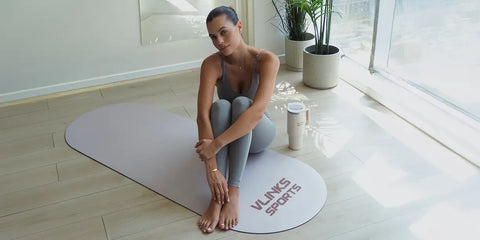
Choose flexible clothing that lets you bend and reach without constant adjusting. A comfortable waistband and enough fabric coverage are useful during kneeling and seated positions. Browse women's leggings and workout tops, and use a comfortable, stable surface for floor stretches.
Frequently asked questions
Should I stretch after a walk?
You can include gentle calf and thigh stretches if you enjoy them or are working on flexibility. They are an option, rather than a requirement for every walk.
How do stretches differ after upper-body and leg workouts?
Choose the muscle groups you want to work on. After upper-body training, you might focus on shoulders, chest and arms; after a leg session, you might choose calves, thighs and hips.
Should stretching hurt?
No. A light pulling sensation is enough. Back off if you feel pain, and do not force a position that continues to hurt.
Can I stretch at home without equipment?
Most of these stretches use a wall, a stable support or floor space. A mat or folded towel can make kneeling more comfortable.
Further reading: Mayo Clinic on stretching and flexibility and NHS post-exercise stretches.


