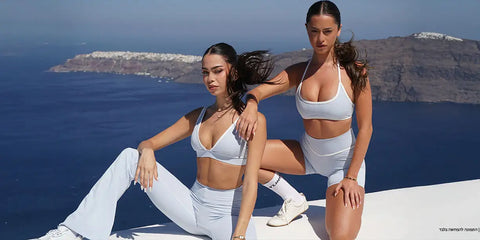
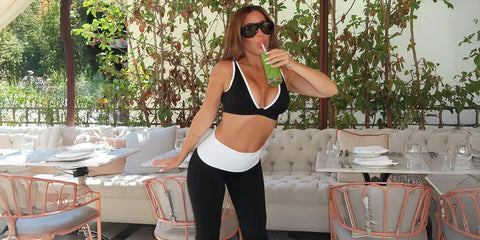
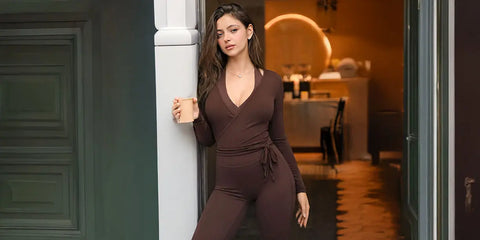
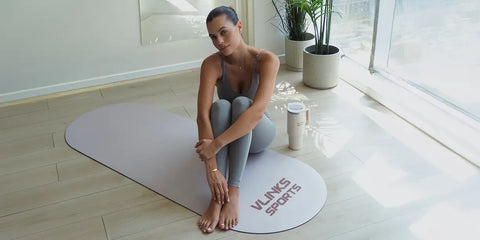
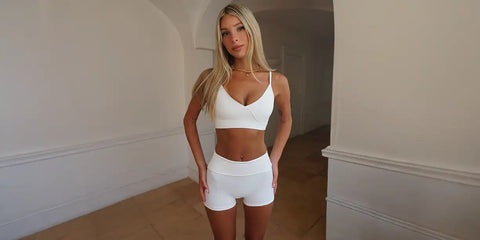

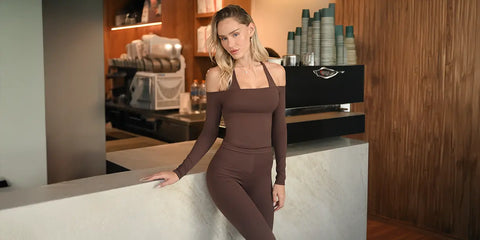
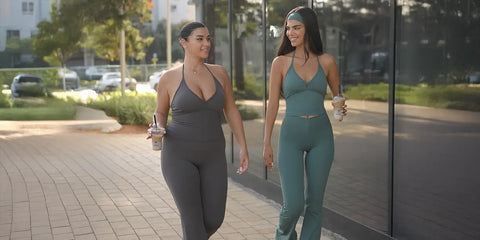





A shirt that feels light at the start of a workout can feel very different once you are sweating. In warm weather, the right fabric and fit can help you feel more comfortable, whether you are walking outside, lifting in the gym or heading to a studio class.
Here is what to look for in summer workout clothes for women, from breathable tops to shorts that stay in place. Clothing is one part of the plan; adjust the session itself when the heat calls for it.
Why fabric matters in warm weather
Sweat helps cool your body as it evaporates. Clothing affects how moisture moves and how the fabric feels against your skin, but temperature, humidity, airflow and exercise intensity all play a part too.
Cotton absorbs moisture and can feel damp or heavy during a sweaty session. Some technical fabrics are designed to spread moisture and dry more quickly. Even a quick-drying outfit can become wet, especially in humid conditions, so choose for comfort rather than a promise of staying completely dry.
Features to look for in summer activewear
Moisture management
Moisture-wicking fabric is designed to move moisture through or across the material so it can spread and evaporate. Look for specific product information. A nylon or polyester label alone does not tell you how well a garment will perform.
Quick drying
A fabric that dries relatively quickly can feel less heavy and clingy after sweating. Drying time still depends on the amount of moisture and the conditions. It does not mean the garment will never feel wet.
Airflow
Fabric construction, thickness and fit all affect airflow. A light, relaxed top may feel comfortable for outdoor movement, while a secure fitted style can be more practical for Pilates or activities involving equipment. Choose a fit that suits both the heat and the workout.
Comfortable seams
Repeated movement and damp fabric can make rubbing more noticeable. Check the underarms, waistband and inner-thigh area for seams or edges that bother you. Flat seams may help, but the overall fit still matters.
Coverage you feel good in
Shorts, leggings, crop tops and longer tops can all work in a summer wardrobe. Test your coverage when you bend, reach and move. Choose the length you enjoy wearing rather than assuming less fabric is always the best answer.
Choose an outfit for your activity
Outdoor walks and runs
Look for lightweight clothing that allows movement and airflow. Choose shorts or leggings that stay comfortable during repeated steps, and a sports bra with the support you need. Consider sun exposure, visibility and the route as well as temperature.
If you want rated sun protection from a garment, check for a stated UPF rating. Ordinary activewear should not be assumed to provide a particular level of UV protection.
Yoga and Pilates
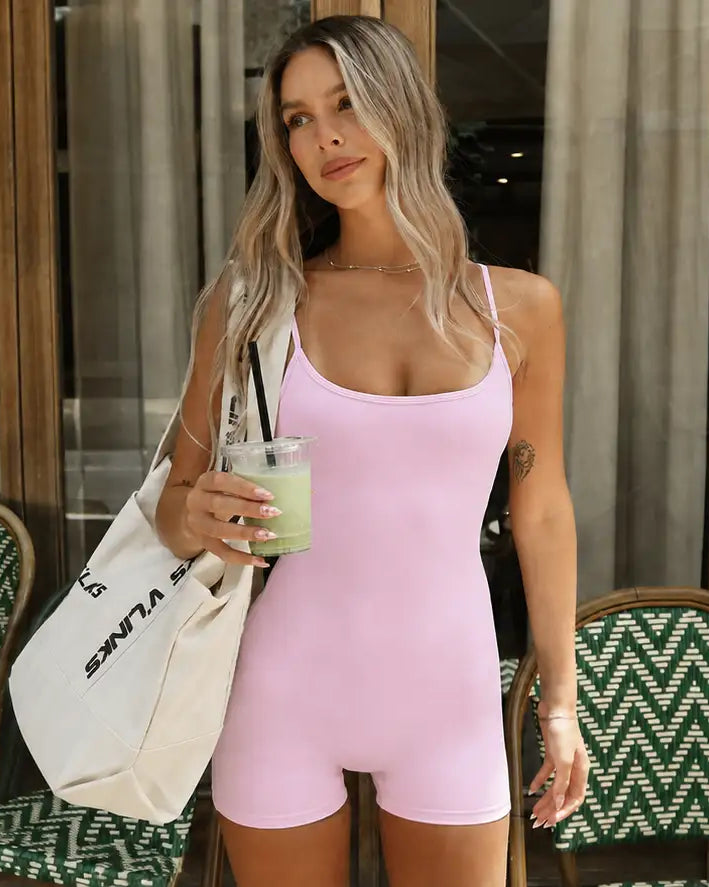
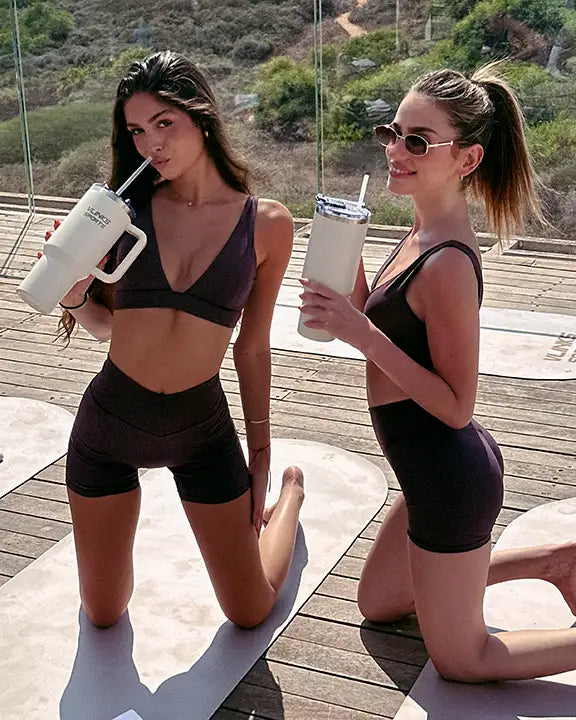
Soft, flexible pieces that stay in place can help you concentrate on the session. A fitted top and biker shorts are one option, while leggings offer more coverage. Check the room conditions and your studio's clothing guidelines.
Strength training and HIIT
Try a squat and an overhead reach when checking your outfit. The waistband should feel secure without digging in, and your top should allow free shoulder movement. For jumping and other higher-impact movements, choose your sports bra separately for the support you need.
What about sweat marks?
Sweating is normal during exercise. How visible it looks depends on the fabric, color and amount of moisture. Some shades make marks less noticeable, but no general fabric category guarantees an invisible-sweat finish.
Choose colors you like and bring a dry top if you want to change afterward. You do not need to hide the fact that you have been moving.
Plan for the heat, not just the outfit
Check the forecast and local heat advice. Consider a cooler time of day, a shaded route or an indoor session when conditions are uncomfortable. Allow time to get used to warmer weather, take breaks and have fluids available.
If you feel faint or weak, stop exercising and move to a cool place. Seek medical help for symptoms of heat-related illness; confusion or collapse requires emergency help. Read the CDC's guidance on heat and exercise for more information.
Frequently asked questions
Does thin fabric mean poor quality or less coverage?
Not necessarily. Fabric construction and fit matter as well as thickness. Check coverage in good light and while moving, and read the details of the particular item.
Should I size up for a sweaty workout?
Use your measurements and the intended fit of the garment. A looser top may be your preference for airflow, but bottoms still need to stay comfortably in place. Sweat alone is not a reason to choose the wrong size.
How do I care for clothes after a hot workout?
Do not leave damp activewear packed in a bag for hours. Let it air out if you cannot wash it soon, then follow the care label. Avoid assuming a synthetic fabric is odor-resistant unless the product specifically says so. See our activewear washing guide.
Build your summer workout wardrobe
Explore Vlinks biker shorts, crop tops, sports bras and activewear sets. Compare the fit and fabric details and choose pieces that suit your activities, climate and personal style.


